Thursday, February 1, 2018

Chromebooks with Intel chips will soon finally be able to play HD Vudu & Netflix over HDMI

In an effort to prevent piracy, platforms like Netflix and Hulu use encryption and digital rights management schemes to restrict the playback of content on certain devices. However, because of the strictness of some of the requirements, some devices in the wild aren't capable of outputting HD video from these platforms. The reasons can vary — we've covered how phones from manufacturers like OnePlus and ZTE lack the necessary Widevine L1 DRM. But in the case of Chromebooks with Intel processors, high-bandwidth digital content protection (HDCP) is to blame.

HDCP, if you're out of the loop, is a form of Intel-developed copyright protection that encrypts digital audio and video signals traveling over HDMI and DisplayPort connections. It uses an authentication key that prevents non-HDCP-compliant monitors, televisions, PCs, and other hardware from sending or receiving the signals, which poses a real problem for Intel-powered Chromebooks. They lack HDCP support, and so can't output HD video from Netflix, Vudu, and other services.

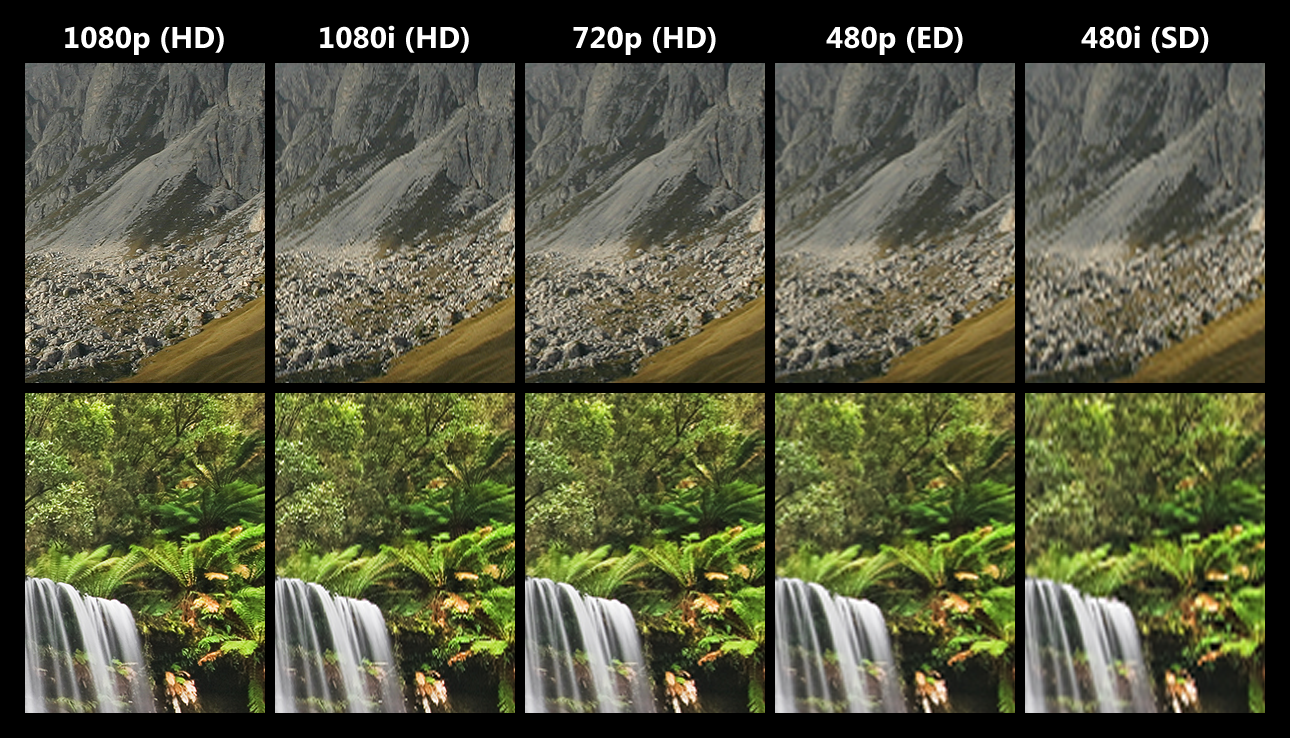
A comparison of HD and SD resolutions. // Source: Wikimedia

A fix for those Chromebooks is on the way, though. New commits in the Chromium Gerrit source code review page imply that Google's adding HDCP support to the Chrome OS kernel.

There are three new commits related to HDCP: Two patches that add support for HDMI and DisplayPort connectors by implementing intel_hdcp_shim, and a patch that adds the framework required for HDCP support on Intel connectors. A future release of Chrome OS will merge the changes and, consequently, bring support for HD video playback over HDMI to Intel-based Chromebooks.

It's not clear yet how soon HDCP support will come to Chrome OS, but it's bound to be a welcome change for folks who hook up their Chromebooks to TV screens. If you'd like to have a look at the code yourself, you can check out all of the HDCP-related commits here, here and here.


from xda-developers http://ift.tt/2nsBDxt
via IFTTT

Wednesday, January 31, 2018

Stable OxygenOS 5.0.2 brings Face Unlock to the OnePlus 5

The OnePlus 5 may have been outshined by the OnePlus 5T, but it remains a capable 2017 flagship smartphone. It shares some hardware in common with its successor, including a Qualcomm Snapdragon 835 system-on-chip, and software-wise, OnePlus has taken pains to keep it up to date. In fact, the OnePlus 5 received a stable Android 8.0 Oreo-based OxygenOS 5.0 update in December, while the OnePlus 5T only received a stable Android Oreo update today.

At launch, the OnePlus 5T had a key software feature that differentiated it from the OnePlus 5: Face Unlock. It relied on the phone's front-facing camera, so there weren't any technical challenges that would have prevented it from coming to the OnePlus 5. Sure enough, OnePlus listened to feedback and said that Face Unlock would make its way to the OnePlus 5. It finally came in the OxygenOS Open Beta 3, and on Wednesday, Face Unlock hit the stable channel.

OnePlus has started rolling out OxygenOS 5.0.2 for the OnePlus 5, the company announced on the official OnePlus forums. In addition to Face Unlock, the new firmware includes CPU security patch CVE-2018-13218 and updated system apps including the OnePlus Launcher, Gallery, Weather and File Manager. It also brings "enhanced EIS for video recording", which should theoretically improve video quality. Unfortunately, OnePlus didn't go into detail regarding the enhanced EIS.

Here's the changelog:

OnePlus 5 OxygenOS 5.0.2 Changelog

System

  • Added Face unlock function
  • Applied CPU security patch: CVE-2017-13218
  • General bug fixes and improvements

Applications

  • Updated Launcher to v2.2
  • Updated Gallery to v2.0
  • Updated Weather to v1.9
  • Updated File Manager to v1.7.6

Camera

  • Enhanced EIS for video recording

OnePlus says that the OxygenOS 5.0.2 update will be rolled out incrementally, at first. It will reach a small percentage of users today, and roll out more broadly in the coming days.


Source: OnePlus


from xda-developers http://ift.tt/2npu7DG
via IFTTT

Leaked Alcatel 5 Press Renders Show Dual Front-Facing Camera

TCL previewed the Alcatel 5 alongside the Alcatel 1 and Alcatel 3 at the 2018 Consumer Electronics Show in January, revealing that the $300 smartphone would feature a "borderless" 18:9 screen, facial recognition technology, and a battery that'd supply up to "a day's worth" of power. The company promised to show more at Mobile World Congress 2018 in late February, but leaked press materials spilled the beans a little early.

WinFuture published a promotional video and product renders of the Alcatel 5 on Wednesday, and they show a brushed metal smartphone with a unique front camera. Above the 5.7-inch FullView HD+ (1440×720) 18:9 IPS display is a dual front-facing module consisting of a 12MP sensor with f/2.0 aperture, and a 5MP sensor with a 1.4μm pixel size, "six-part" optics, and a 120-degree field of view. The "Selfie" mode in the Alcatel 5's camera app automatically switches to the wide-angle sensor when a group of people enters the frame, according to WinFuture, and TCL's software taps the cameras for speedy facial recognition.

alcatel 5 alcatel 5 alcatel 5

On Alcatel 5's rear is a 12MP camera with a f/2.0 aperture, but it's a single-module sensor. Next to it's an LED flash and a fingerprint sensor, and near the bottom is the phone's USB 2.0-capable Type-C port.

Under the hood, the Alcatel 5 packs a MediaTek MT6750 octa-core system-on-chip, with eight ARM Cortex-A53 clocked at 1.5GHz. It's got 3GB of RAM and 32GB of internal storage, a microSD card slot for expandable storage, and a 3,000mAh battery.

alcatel 5 alcatel 5 alcatel 5

The Alcatel 5 supports Bluetooth 4.2 and LTE Cat. 4, which maxes out at 150 Mbps down and 50 Mbps up. It'll launch with Android 8.0 Oreo, according to WinFuture, and come in gold and black color configurations.

The phone's pricing is still a bit fluid, but WinFuture pegs it at €229.99 (~$284.34). That's roughly in line with TCL's past statements, but we'll likely have to wait until MWC 2018 for confirmation.


Source: WinFuture


from xda-developers http://ift.tt/2rWArab
via IFTTT

Huawei Partners with UnionPay International to Accelerate Huawei Pay’s Roll Out Worldwide

These days, it's tough to think of a major smartphone manufacturer that doesn't have its own mobile payments service. Apple has Apple Pay, Google has Google Pay, Samsung has Samsung Pay, and LG has LG Pay. Huawei is no exception — Huawei Pay launched in China in March 2016, and it gave Huawei the distinction of being one of the first Chinese mobile hardware vendors with a payments platform. But the company has grander ambitions. This week, Huawei announced that it's teaming up with UnionPay International to help roll out Huawei Pay worldwide.

Huawei Pay, which is currently compatible with 20 of Huawei's smartphones, is supported by 66 banks and was used to make 4 billion yuan (~$635 million) in payments last year. Its first new market will be Russia, which UnionPay dominates — the payments processor's cards are accepted at 85 percent of terminals and ATMs in the country, 400,000 of which support NFC tap-and-pay technology. And next in line is Eastern Europe.

Huawei declined to provide a timeline for either launch.

Huawei also announced that in the future, Huawei and Honor phone users outside of China will be able to make contactless payments by adding their UnionBank cards in the Huawei Pay app.

"Open sharing is an important direction for the future of the digital economy and intellectual interconnection, which is why Huawei's end-user cloud services built an open and globalized smart mobile ecosystem for the end-user experience" said Alex Zhang, president of Huawei's Consumer Cloud Service, in a statement. "Huawei hopes to work with partners such as UnionPay International to provide more secure and convenient mobile payment services for every user of Huawei smart devices around the world."

So why is Huawei pursuing Huawei Pay instead of adopting a cross-platform solution like Google Pay? While it might make sense for companies like Huawei to rely on Google services, there's a lot of incentive for them to create their own. Android as is today relies heavily on Google and its services, and not every OEM is comfortable with the status quo. Some of them, such as Samsung, have resisted by creating apps and services that duplicate the functionality of Google's own, and Huawei reportedly went so far as to develop its own mobile OS.

There's also a lot of money in mobile payments. According to one study, the contactless payment market will be worth $17.56 billion by 2021. With Huawei Pay, Huawei's hoping to get in on the ground floor.


Source: Huawei


from xda-developers http://ift.tt/2EtTdZk
via IFTTT

Spotify Experiments with a Free Playlist-Only App Called Stations

Spotify is one of the most popular music streaming subscription services in the world. It's constantly expanding old features and introducing new ones, which is one of the reasons it's the platform of choice for more than 100 million users. But it's not resting on its laurels. This week, Spotify published an experimental Android application in the Play Store called Stations, and it's a radical departure from the company's flagship app.

"Stations is the easiest way to listen to the music you love. Totally free," according to the app's Play Store description. "Stations is an experiment by Spotify that makes it easy for anyone to listen to great music. When you have access to all the music in the world, finding the right thing to play can feel like a challenge. With Stations, you can listen immediately, and switching stations is simple and seamless — no searching or typing needed."

Stations, which is being piloted in Australia and was first spotted by app analytics firm Sensor Tower, doesn't require a subscription, but only lets you listen to playlists. The curated collection, which is displayed in large title text you switch between by scrolling, includes Spotify's top picks and personalized playlists such as Discover Weekly and Release Radar. Spotify says Stations will learn your musical tastes over time, and create personalized stations based on the data it collects.

Spotify has both a paid and free music streaming tier, and recent stats show it's surpassed 70 million paying subscribers around the world. Naturally, free accounts are limited in a number of ways. Ads are injected every couple of songs in playlists and albums, and some songs aren't available. In addition, Spotify caps audio quality at 160kbps on desktop, while paid subscribers get access to 320kbps streams.

Stations, just like Spotify's free tier, seems like an attempt to get people to check out what the company has to offer — a gateway, if you will. It's not a bad strategy. If they like what they see, chances are they'll upgrade to a paid subscription.

Stations by Spotify (Free, Google Play) →


from xda-developers http://ift.tt/2FwGaFQ
via IFTTT

Reliance Jio and MediaTek Team Up to Build an Android Go Smartphone

In some regions, high-end and mid-range smartphones reign supreme, but in emerging markets, low-end phones tend to be much more popular. For a while now, Google has been talking about bringing the "next billion users" online, and central to its plan is Android Go, a configuration of Android Oreo optimized for low-end devices. A number of companies have expressed enthusiasm over Android Go since it was unveiled last year, and one of them, MediaTek, announced that it's partnering with India-based carrier Reliance Jio to launch an Android Oreo Go Edition smartphone.

Unless you live in or around India, you might not have heard of Reliance Jio. It's an LTE mobile network operator that made headlines in 2016 by offering free voice calls. It's one of the fastest-growing carriers in the country, and it sells a low-cost phone, the Jio Phone, that starts at just 1,500 Rs. ($~23).

MediaTek, meanwhile, creates system-on-chips for smartphones, tablets, set-top boxes, and more. They've also shown an interest in the Android Go platform — the company's MT6739, MT6739, and MT6580 chips fully support it.

Reliance Jio and MediaTek declined to reveal the price, specifications, or availability of the new smartphone at MediaTek's Curtain-Raiser for 2018 event in New Delhi on Tuesday, where the two companies made the announcement. But MediaTek showcased the features of its MT6739 chip, which supports dual cameras, facial authentication, and dual 4G VoLTE even on Android Oreo Go Edition devices.

At any rate, MediaTek and Reliance Jio's phone won't be the first Android Oreo Go Edition device on the market. Micromax recently announced that the affordable Bharat Go.

"India is growth intensive, a market of immense opportunities with its own set of aspirations and needs," said T L Lee, general manager of MediaTek's Wireless Communication division, at the event. "We continue to intensify our technology collaboration in India, even beyond smartphones, and recognize its importance in the global marketplace."


Source: Gadgets 360


from xda-developers http://ift.tt/2rWiyID
via IFTTT

Learn C from Front to Back with This Ten-Course Bundle

In the world of web and software development, few programming languages are as relied upon and revered as C. Yet, far too many programmers shy away from learning this go-to language due to its perceived complexity and steep learning curve.

The Complete C Programming Bonus Bundle breaks down the mystery and intimidation surrounding this powerful language, and it's available for $19.

With ten courses and 84 hours of content, this extensive bundle walks you through everything from the absolute basics to the most advanced programming techniques used with this general-purpose language. You'll cover pointers, header files, null-terminated strings, buffers, and more—all while using hands-on source code examples that let you learn at your own pace.

There's even a course module dedicated to teaching you how to craft advanced algorithms in C, by breaking down everything from the overarching command logic to the nuances of the code itself.

Add C to your programming toolkit with the Complete C Programming Bonus Bundle—on sale for $19.


from xda-developers http://ift.tt/2BJHG5i
via IFTTT